



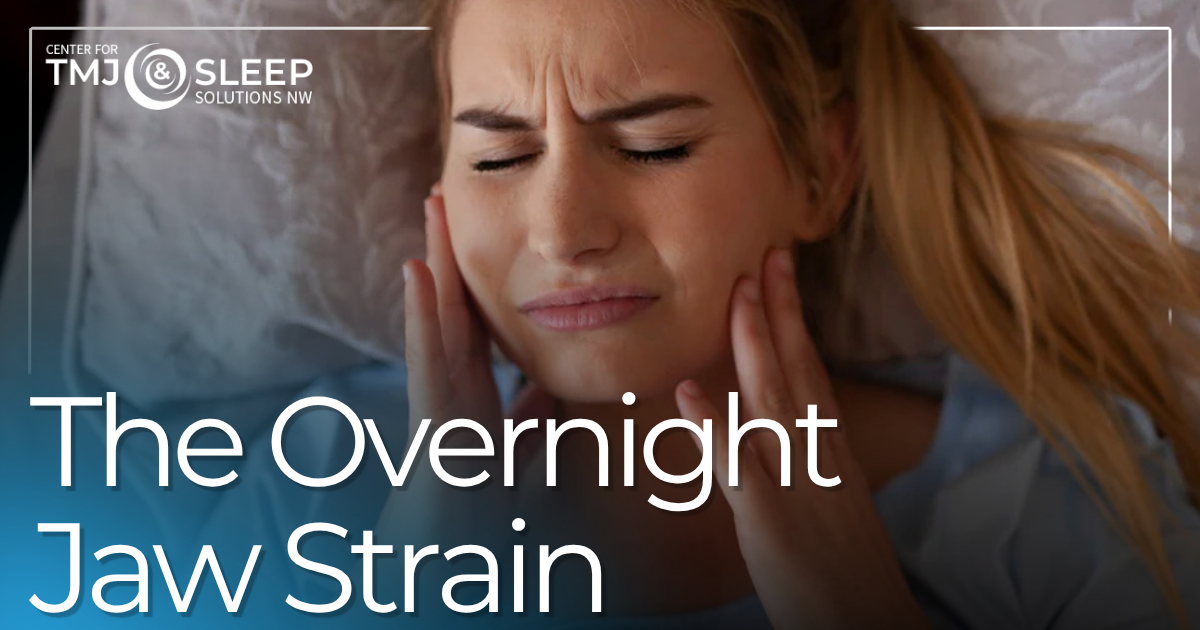
Why Your TMJ Symptoms Feel Worse in the Morning
Have you ever woken up with a sore jaw, a headache, or a feeling of tension in your face and neck, only to notice it gradually improves as the day goes on? If so, you are not alone. Many people living with TMJ symptoms notice that their discomfort is at its worst first thing in the morning. Because these symptoms tend to develop slowly over time, it is easy to assume they are simply part of stress, poor sleep, or the normal aches and pains of daily life. What many patients do not realize is that their jaw may be working overtime while they are asleep.
Your Jaw Does Not Always Rest While You Sleep
When most people think about sleep, they imagine the body completely relaxing for the night. Unfortunately, that is not always what happens with the jaw. Many people unknowingly clench or grind their teeth while they sleep. This habit, known as sleep bruxism, can place significant pressure on the jaw muscles and joints for hours at a time.
Imagine making a fist and holding it tightly overnight. By morning, those muscles would feel tired and sore. The same thing happens with the muscles that control your jaw if you clench your teeth at night. Over time, this repeated strain may contribute to jaw tightness, facial soreness, headaches, tooth wear, and muscle fatigue that seems to appear out of nowhere each morning.
The Connection Between Sleep and TMJ
One reason TMJ symptoms can be difficult to understand is that sleep and jaw function are closely connected. For some patients, disrupted breathing patterns during sleep may contribute to increased jaw muscle activity. When the body senses difficulty maintaining an open airway, it may subconsciously tighten certain muscles, including those around the jaw and face.
This can create a vicious cycle in which poor sleep contributes to jaw tension, and jaw tension makes restful sleep more difficult. Many patients spend years treating headaches, neck pain, or facial soreness without realizing that their sleep habits may be part of the bigger picture.
Signs Your Jaw May Be Under Stress Overnight
Morning TMJ symptoms can show up in different ways. Some patients wake up with a dull ache near the jaw joints, while others notice tightness that extends into the temples, cheeks, neck, or shoulders.
You may also notice that your jaw feels stiff when opening your mouth, that chewing feels uncomfortable early in the day, or that clicking and popping sounds seem more noticeable in the morning. Because these symptoms build gradually, many people become accustomed to them and stop questioning whether they are normal. The truth is that waking up uncomfortable every day is not something you should simply accept.
Why Symptoms Often Become Easy to Ignore
One of the most surprising things about TMJ disorders is how adaptable people can be.
Patients often tell us they did not realize how much discomfort they were experiencing until it improved. Over time, frequent headaches, facial tension, jaw soreness, and neck tightness can become part of the daily routine.
The body learns to compensate, but that does not mean the underlying issue has gone away. Addressing symptoms early may help prevent additional strain on the jaw joints and surrounding muscles while improving overall comfort.
Finding Relief Starts with Understanding the Cause
TMJ treatment is not about finding a one-size-fits-all solution. Every patient experiences symptoms differently, which is why a personalized approach is so important. Depending on the source of the problem, treatment may focus on reducing clenching pressure, improving jaw positioning during sleep, supporting healthier muscle function, or addressing sleep-related factors that may be contributing to the strain. Many patients are surprised to discover that improving sleep quality can also improve jaw comfort, energy levels, and overall well-being.
Better Mornings May Be Closer Than You Think
Waking up with jaw pain, headaches, or facial tension may feel familiar, but it is not something you have to simply live with. Understanding the connection between TMJ symptoms and sleep is often the first step toward lasting relief. When the jaw is able to rest more comfortably overnight, many patients notice meaningful improvements in both their mornings and their quality of life.
If you have been waking up with jaw discomfort or suspect nighttime clenching may be contributing to your symptoms, we invite you to schedule a consultation with our office located in Silverdale, Federal Way, and Bellevue, WA. Our team is here to help you understand the cause of your symptoms and explore solutions designed to support healthier sleep and a more comfortable tomorrow.