


Snoring and Sleep Apnea: Are They Connected?
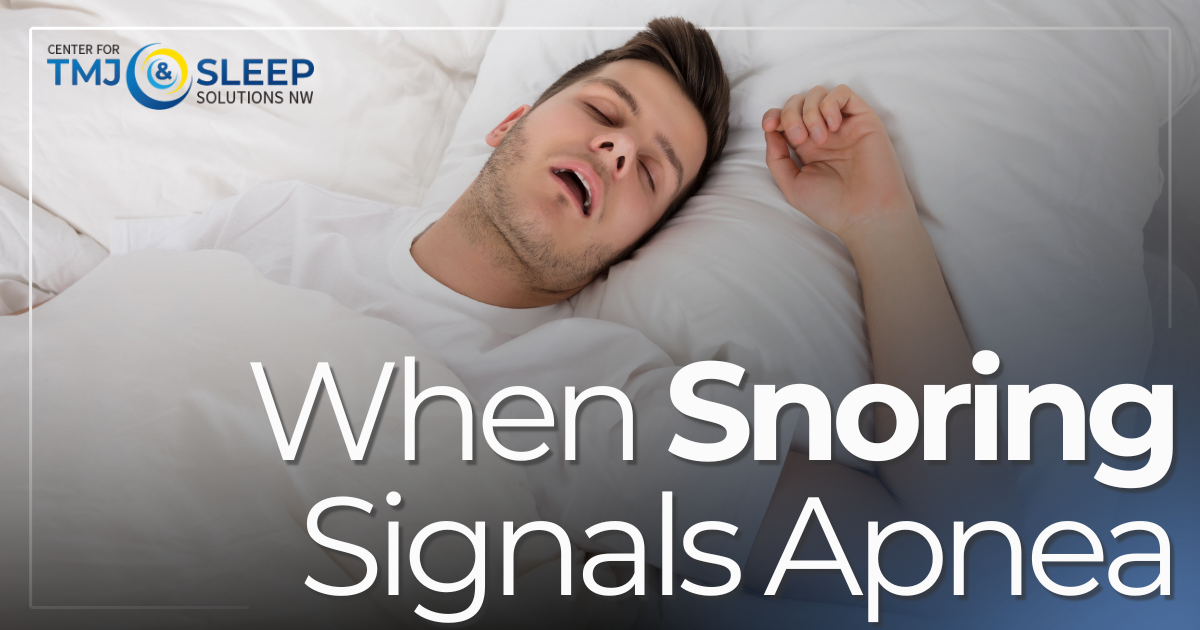
Snoring is something many people joke about. It often becomes the subject of lighthearted complaints from partners or family members. For some people, it is simply an occasional annoyance. For others, it happens almost every night and can be loud enough to wake the entire household.
But snoring is not always just noise. In some situations, it can be a sign that something deeper is happening during sleep. At Center for TMJ & Sleep Solutions NW, one of the most common questions patients ask is whether snoring and sleep apnea are connected. The answer is yes, there can definitely be a relationship between the two.
Why People Snore
Snoring happens when air moves through a partially blocked airway during sleep. As air passes through the throat, it causes the soft tissues in the back of the mouth to vibrate. That vibration is what creates the familiar snoring sound.
Several things can make snoring more likely. Sleeping on your back, nasal congestion, alcohol before bedtime, and certain jaw or airway structures can all contribute to it. For many people, snoring is mild and does not pose serious health risks. However, when snoring becomes frequent and loud, it may be a sign that the airway is narrowing more than it should during sleep.
When Snoring Is Linked to Sleep Apnea
Sleep apnea occurs when the airway becomes blocked enough that breathing stops for short periods during sleep. These breathing pauses may occur repeatedly throughout the night. Because the airway is narrowing and struggling to stay open, snoring often appears alongside sleep apnea. In fact, loud and chronic snoring is one of the most common warning signs of the condition. It is important to note that not everyone who snores has sleep apnea. However, most people with sleep apnea do snore, which is why persistent snoring calls for attention.
Signs That Snoring May Be More Than Just Snoring
There are a few signs that may suggest snoring is connected to sleep apnea rather than being a simple sleep habit. For example, some people experience gasping or choking noises during sleep as breathing stops briefly and then restarts.
Other common signs include:
- waking up with a dry mouth
- morning headaches
- daytime fatigue
- difficulty concentrating during the day.
Many people also report feeling tired even after what should have been a full night of sleep. Often, a partner is the first person to notice these patterns during the night.
Getting the Right Help
The encouraging news is that snoring and sleep apnea can often be treated once the underlying cause is identified. As sleep specialists, we understand how the airway behaves during sleep and provide solutions to keep it open, including custom oral appliances that gently reposition the jaw and tongue, helping to maintain a clear airway and reducing snoring in many cases.
A Better Night’s Sleep for Everyone
Snoring might start as a minor annoyance, but it can sometimes signal something more serious. When snoring is linked to sleep apnea, addressing the issue can improve not only sleep quality but also overall health and energy levels.
If snoring has become a nightly routine or seems to be getting louder or more frequent, it may be worth exploring whether sleep apnea could be involved. Better sleep often starts with understanding what your body is trying to tell you at night. Contact us at Center for TMJ & Sleep Solutions NW at one of our locations in Silverdale, WA, Bellevue, WA, and Federal Way, WA.