


What Happens to Your Body When Sleep Is Interrupted All Night?
You went to bed at 10:30 and got up at 6:30. That is eight hours, so why do you feel like you barely slept? Time in bed and restorative sleep aren’t necessarily the same thing.
When obstructive sleep apnea repeatedly interrupts your breathing, your body may spend the night responding to those interruptions instead of moving smoothly through the restorative sleep it needs. You may not remember waking up, but your body certainly notices.
Your Brain Keeps Sounding the Alarm
With obstructive sleep apnea, the airway repeatedly narrows or closes during sleep. When breathing is interrupted, oxygen levels can fall, and your brain responds by briefly arousing you enough to restore airflow. Then you fall back asleep, and the cycle can happen again.
These arousals may be so brief that you don’t remember them in the morning. From your perspective, you slept through the night. From your body’s perspective, the night may have been filled with repeated interruptions.
Eight Hours in Bed Can Still Leave You Exhausted
Imagine trying to recharge your phone while someone keeps unplugging the charger. It may be plugged in for eight hours, but that doesn’t mean it got eight uninterrupted hours of charging. Fragmented sleep can have a similar effect on how restored you feel.
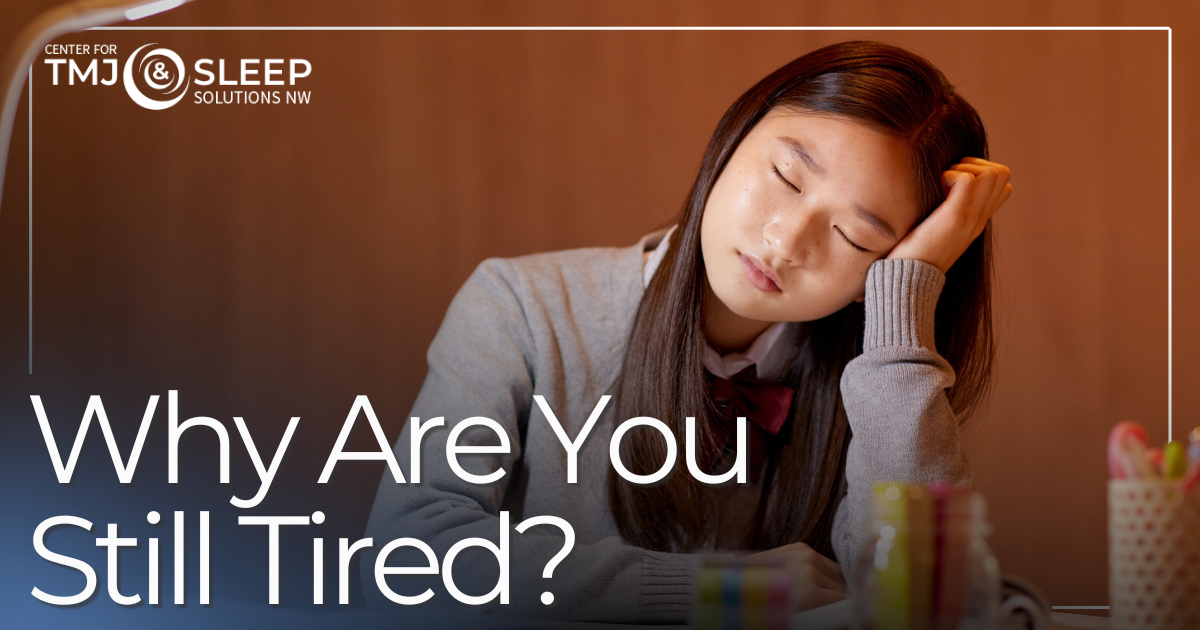
Instead of waking refreshed, you may drag yourself out of bed still tired. Getting through the workday can require more effort. You might reach for another cup of coffee in the afternoon or struggle to stay alert during quiet moments. Over time, feeling tired can become so normal that you stop questioning it.
Your Brain May Feel It During the Day
Poor-quality sleep does not always show up as simply wanting a nap. You might find it harder to concentrate during a meeting, remember something you were just told, or stay focused on a task. You may feel mentally foggy or notice that everyday decisions require more effort than they used to. Your mood can change too. When your brain doesn’t get the restorative sleep it needs, irritability and impatience can become the norm.
Your Body May Be Sending Other Clues
Sometimes the signs are there as soon as you wake up. Morning headaches, dry mouth or throat, and facial or jaw discomfort can accompany sleep-disordered breathing. Your partner may notice loud snoring, gasping, or restless sleep long before you notice anything unusual.
Sleep apnea is also about more than how you feel in the morning. Repeated nighttime breathing disruptions place stress on the body, and untreated sleep apnea is associated with serious long-term health concerns. That is why persistent symptoms need further investigation.
Quality Vs. Quantity
If you consistently get eight hours of sleep but still wake up exhausted, you may need to consider what’s happening during those hours. At Center for TMJ & Sleep Solutions NW, we evaluate sleep and breathing to help determine whether a sleep-related breathing disorder may be interfering with the restorative rest your body needs. For patients diagnosed with sleep apnea, treatment options can include CPAP, oral appliance therapy, and other non-surgical therapies.
If you regularly wake feeling unrefreshed, struggle with daytime fatigue or brain fog, or have been told that you snore or gasp during sleep, schedule an evaluation at one of our offices in Silverdale, Federal Way, or Bellevue, WA. Instead of simply counting the hours you spend in bed, let’s find out whether your body is getting the quality sleep it needs.