



Exercise Boosts Airway Health
Your airway consists of muscles that — like all muscles in your body — respond well to regular exercise. When you strengthen the muscles in your tongue, throat, and soft palate, you create better support for keeping your airway open during sleep. Many patients are surprised to learn that targeted exercises can complement their oral appliance therapy and enhance their overall results. These movements don’t require equipment, take just minutes per day, and can be done almost anywhere.
Tongue Strengthening Exercises Make a Difference
Your tongue plays a crucial role in keeping your airway open, and strengthening it can significantly impact your sleep quality. One effective exercise involves pressing your entire tongue against the roof of your mouth and holding it there for five to ten seconds. Repeat this movement ten times, twice daily. This simple action strengthens the tongue muscles that help prevent it from falling backward and blocking your airway during sleep.
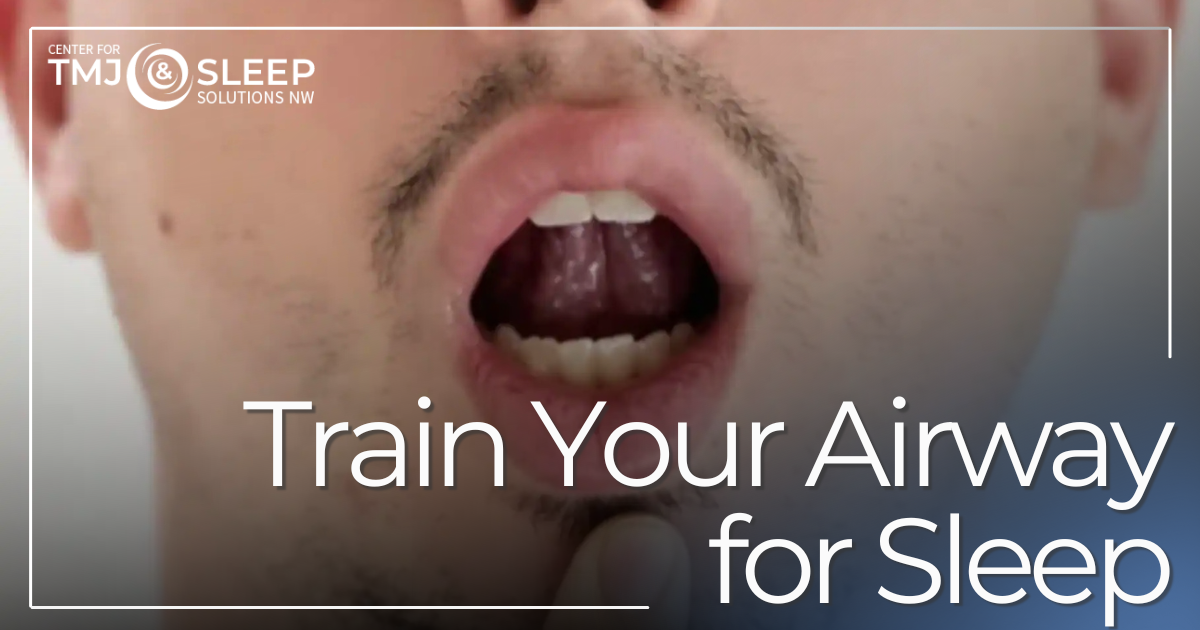
Another valuable tongue exercise focuses on the back portion, where most airway obstruction occurs. Stick your tongue out as far as comfortable, then try to touch your chin with the tip. Hold this position for three to five seconds, relax, and repeat ten times. You might feel silly doing this exercise, but it effectively targets the muscles that need strengthening most.
Soft Palate Exercises Improve Upper Airway Function
The soft palate, located at the back of the roof of the mouth, contributes to breathing problems when it’s weak or overly relaxed. Strengthening this area helps prevent the vibrations that cause snoring and reduces the likelihood of airway collapse. One simple exercise involves saying vowel sounds in an exaggerated way, really stretching your mouth and throat muscles with each repetition. Try saying “ah-ah-ah” loudly and clearly twenty times, focusing on engaging the muscles at the back of your throat.
Singing exercises also work wonderfully for strengthening the soft palate and surrounding muscles. You don’t need to be a good singer to benefit from this approach. Simply singing along to your favorite songs, particularly those that require holding notes or hitting higher pitches, engages and strengthens these crucial muscles. Many patients find this to be the most enjoyable airway exercise because it doesn’t feel like work at all.
Breathing Techniques That Support Airway Health
How you breathe throughout the day influences your airway muscle tone and nighttime breathing patterns.
- Nasal breathing keeps your airway muscles properly engaged and promotes better oxygen exchange. Try this simple exercise several times daily: close your mouth, relax your jaw, and breathe slowly and deeply through your nose for five minutes. Focus on making each breath smooth and controlled rather than quick and shallow.
- Diaphragmatic breathing, also called belly breathing, strengthens the muscles that support proper breathing mechanics. Lie on your back with one hand on your chest and the other on your belly. Breathe in slowly through your nose, allowing your belly to rise while keeping your chest relatively still. Exhale slowly through your mouth, feeling your belly fall. Repeat this pattern for five to ten minutes daily. This exercise not only strengthens breathing muscles but also promotes relaxation.
Consistency Brings the Best Results
Like any exercise program, airway exercises deliver the best results when you practice them consistently. Most patients notice improvements in about four to six weeks with daily practice, though some experience benefits sooner. The key is making these exercises part of your regular routine rather than doing them sporadically. Many people find it helpful to perform their airway exercises at the same time each day, such as during their morning routine or while winding down before bed.
Combine Exercises With Your Oral Appliance Therapy
Airway exercises work best when combined with oral appliance therapy. Think of the exercises as complementing your device by strengthening the muscles that support proper airway function. Together, these approaches create a comprehensive strategy for improving your sleep and breathing.
Schedule a comprehensive evaluation with Center for TMJ & Sleep Solutions NW at one of our locations in Silverdale, WA, Bellevue, WA, and Federal Way, WA to create a personalized plan to help your airway stay strong, improve your breathing, and get restorative sleep.